When homeowners decide to sell, they typically focus on one core question:
“What price should I list my home at?”
While pricing is important, it is only one part of a much larger equation.
What many sellers overlook is how buyers actually behave—how they search, compare, evaluate, and ultimately decide.
Understanding buyer behavior is often the difference between:
- A listing that sits
- A listing that generates strong interest and competitive offers
Buyers Don’t See Homes — They See Options
From a seller’s perspective, a home feels unique.
It has:
- Personal value
- Emotional significance
- Distinct features
But buyers see something very different.
They see:
- A list of comparable properties
- A range of price points
- Trade-offs between features, location, and value
Every home is evaluated relative to other available options, not in isolation.
The First Impression Window Is Extremely Short
In most Michigan markets, including Detroit, Ann Arbor, and Grand Rapids, buyer behavior follows a consistent pattern:
- Listings are scanned quickly
- Photos and price drive initial attention
- Decisions to engage happen within minutes
This creates a narrow window where:
👉 First impressions determine whether a listing moves forward
Case Example: Two Listings, Same Market
Scenario:
Two homes listed in Grand Rapids:
| Factor | Home A | Home B |
|---|
| Price | Slightly higher | Competitive |
| Photos | Average | Strong |
| Accessibility | Limited | Flexible |
Result:
- Home B receives more showings within first week
- Buyers perceive higher value
- Offers arrive sooner
👉 Key takeaway:
Buyer behavior is influenced more by perception and accessibility than by minor differences in property features.
Price Anchoring Happens Instantly
The moment a buyer sees a price, it becomes their reference point.
This affects:
- How they compare listings
- What they consider “good value”
- How they negotiate
Example:
If a home is listed above perceived market value:
- Buyers filter it out quickly
- Engagement drops
- Time on market increases
If priced competitively:
- More visibility
- More showings
- Higher likelihood of multiple offers
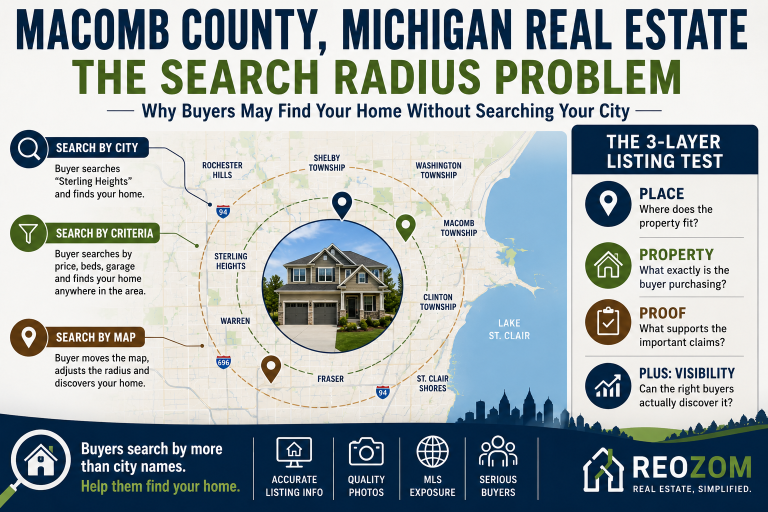
Visibility Drives Opportunity — Not Assumptions
One of the biggest misconceptions among sellers is:
“The right buyer will find my home”
In reality:
- Buyers discover homes through structured platforms
- Visibility determines reach
- Distribution determines opportunity
This is why access to MLS distribution plays a central role in buyer behavior.
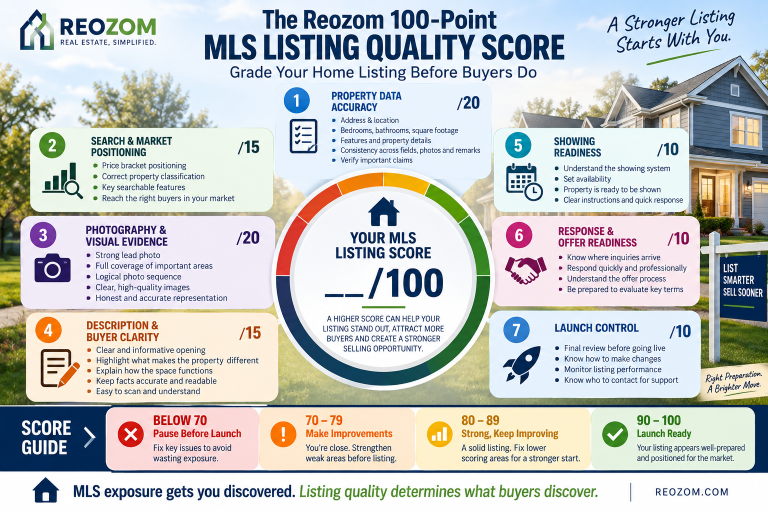
Buyers Expect Speed and Simplicity
Modern buyers operate with different expectations than in the past.
They expect:
- Quick responses
- Easy scheduling
- Clear communication
When these expectations are not met:
- Interest drops
- Buyers move to alternative listings
- Opportunities are lost
Where Sellers Lose Buyers Without Realizing It
Common friction points include:
- Delayed responses to showing requests
- Complicated scheduling processes
- Lack of transparency around availability
Each of these introduces friction into the buyer journey.
And friction leads to:
👉 Drop-off
Case Insight: The Impact of Response Time
In many transactions:
- Listings that respond within hours see higher engagement
- Listings that delay responses lose momentum
Even small delays can:
- Shift buyer interest elsewhere
- Reduce competitive pressure
Aligning Strategy with Buyer Behavior
Sellers who understand buyer behavior make better decisions:
- They respond faster
- They adjust pricing based on feedback
- They improve accessibility
This alignment creates:
- More consistent showing activity
- Better offer quality
- Faster sales cycles
A More Direct Way to Engage Buyers
Modern real estate platforms are designed to reduce friction between buyers and sellers.
These approaches are typically supported by platforms that combine technology with real estate expertise, allowing sellers to manage the process more efficiently.
👉 Learn more about how our platform is built and the vision behind it on our – About Reozom — Flat-Fee MLS in Michigan & Florida
They enable:
- Direct scheduling
- Faster communication
- Real-time visibility into activity
This creates a smoother experience for both sides.
👉 Explore how this works in practice:
Michigan flat fee MLS listing service
The Shift Toward Buyer-Centric Selling
Traditionally, real estate has been:
👉 Seller-driven
But today, it is increasingly:
👉 Buyer-driven
Sellers who adapt to this shift:
- Think like buyers
- Optimize for accessibility
- Focus on responsiveness
Final Thought
Selling a home is not just about listing—it’s about understanding how buyers think.
The most successful sellers are not just those who:
But those who:
- Understand behavior
- Reduce friction
- respond quickly
Understanding buyer behavior is only one part of the equation.
The broader impact comes from how the entire real estate process is structured and supported.
👉 To understand the thinking and approach behind this model, visit our About Reozom — Flat-Fee MLS in Michigan & Florida