When most homeowners list their property for sale, they only see the public version of their listing — the photos, price, description, and property details visible on websites like Zillow or Realtor.com.
But inside the Multiple Listing Service (MLS) used by real estate agents, there is much more data behind the scenes.
This hidden data plays an important role in determining how visible your listing becomes to buyer agents and how quickly your home attracts interest.
Understanding how this data works can help sellers position their property more effectively and improve their chances of receiving offers.
What Is the MLS and Why It Matters
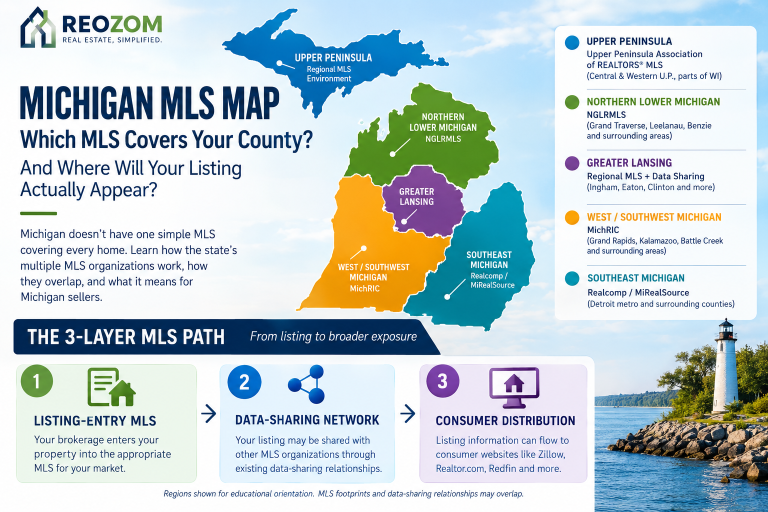
The Multiple Listing Service (MLS) is the primary database used by real estate agents to share property listings.
Instead of searching public websites, most buyer agents search directly through the MLS system. This means that if your property is listed on the MLS, it becomes visible to thousands of agents who represent buyers.
MLS listings also feed property data to major consumer websites such as:
Zillow
Realtor.com
Redfin
brokerage IDX websites
Because of this distribution network, MLS exposure remains one of the most powerful marketing tools when selling a home.
The Hidden Metrics Inside MLS Listings
While sellers see the public version of their listing, MLS systems often track internal metrics that agents use to evaluate listing performance.
These metrics can provide insights into how buyers and agents are interacting with a property listing.
Days on Market (DOM)
One of the most commonly referenced metrics in real estate is Days on Market.
This number tracks how long a property has been listed for sale.
If a home stays on the market for an extended period, buyers may start to wonder whether something is wrong with the property.
Because of this, many agents monitor Days on Market closely and adjust pricing strategies accordingly.
Showing Activity
Another important metric is the number of showings a property receives.
Showing activity helps agents measure buyer interest.
For example:
In many cases, agents use showing feedback to help sellers adjust their listing strategy.
Listing Views by Agents
Some MLS platforms also track how many agents have viewed a particular listing within the MLS system.
This data can help determine whether the listing is appearing frequently in agent searches.
If listing views are low, it may indicate:
the price is outside common search ranges
the property is not appearing in common filters
the listing description may not contain relevant keywords
Price Change History
MLS systems also track the history of price changes.
This information is visible to agents and can influence how they perceive a listing.
For example:
Listing Status Changes
MLS listings go through several status updates during the selling process.
Common statuses include:
Active
Pending
Contingent Continue to Show
Sold
Expired
Withdrawn
Agents monitor these statuses to understand local market trends.
Why Pricing Strategy Is Critical
Pricing plays a major role in how listings appear in MLS searches.
Buyer agents typically search properties using price filters such as:
$300,000 – $350,000
$350,000 – $400,000
$400,000 – $450,000
If a property is priced just outside a common range, it may not appear in many searches.
For example:
A home priced at $351,000 might not appear in searches capped at $350,000.
Because of this, pricing strategy is one of the most important decisions when listing a property.
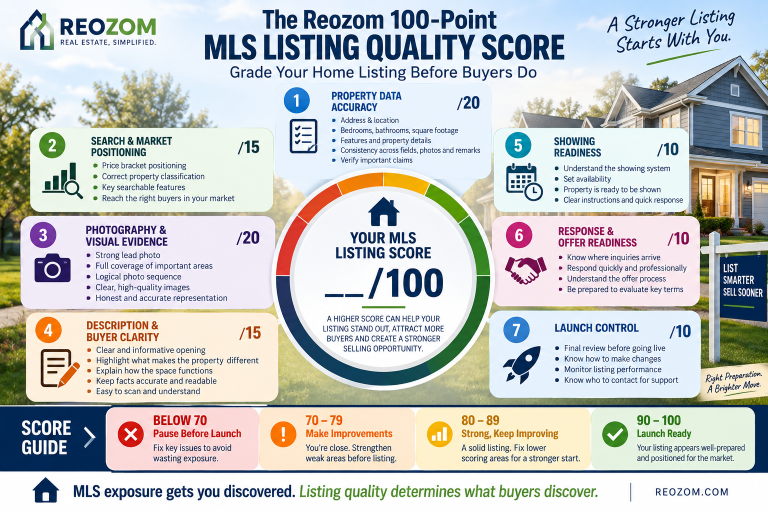
The Importance of High-Quality Listing Photos
Photos are often the first thing buyers and agents notice when reviewing a property listing.
Listings with professional photos typically receive more clicks, more showings, and more buyer interest.
Important listing photos usually include:
Clear, well-lit images can make a listing stand out in MLS search results.
Listing Descriptions Still Matter
Although MLS searches rely heavily on filters such as price and location, listing descriptions still play an important role.
Agents sometimes search the MLS using keywords.
Examples include:
updated kitchen
finished basement
waterfront property
new roof
large backyard
Including detailed information in the listing description can help the property appear in additional search results.
How Digital Platforms Are Changing the Listing Process
The real estate industry is gradually becoming more digital.
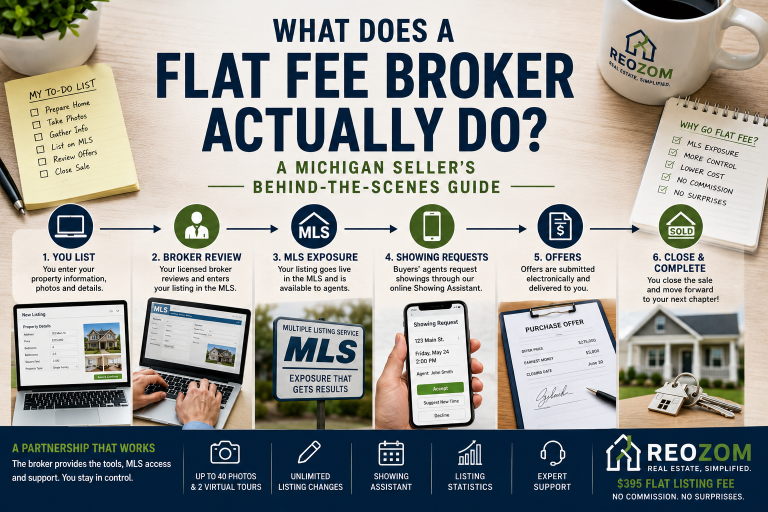
Modern listing platforms allow sellers to manage much of the listing process online.
Through digital listing platforms such as Reozom, sellers can:
enter property details online
upload listing photos
sign listing agreements electronically
review listing information before submission
This approach simplifies the listing process while ensuring that the information submitted to the MLS is accurate.
Customer support is also available to help verify listing details before they are submitted to the MLS system.
Why MLS Exposure Still Matters Today
Despite the growth of real estate websites and social media marketing, the MLS remains the primary tool agents use to find homes for buyers.
Because most buyers work with agents, MLS visibility ensures that a property reaches the largest possible audience.
This is why many homeowners choose MLS listing services when selling their property.
Frequently Asked Questions
What data does the MLS track?
MLS systems track a variety of data including days on market, listing status, showing activity, and price history.
Can sellers see MLS analytics?
Some information is available to sellers through their listing broker or platform, while other analytics are primarily used by agents.
Why is MLS exposure important?
MLS exposure allows listings to be seen by thousands of buyer agents and distributes property data to major real estate websites.
Conclusion
The MLS contains much more information than most sellers realize.
Understanding how MLS listing data works can help sellers improve visibility, attract more showings, and ultimately increase the chances of selling their home successfully.
As digital real estate platforms continue to evolve, sellers now have more tools than ever to manage their listings and reach buyers efficiently.
Florida FAQ
What is a Florida flat fee MLS listing?
A Florida flat fee MLS listing allows homeowners to place their property on the MLS for a fixed fee through a licensed broker.
Do Florida sellers need MLS exposure?
Yes. MLS exposure allows listings to be visible to buyer agents and real estate search platforms.
What is sale by owner in Florida?
Sale by owner refers to homeowners managing the sale of their property directly rather than using a traditional listing model.