If you are comparing a flat fee broker in Michigan after moving away, the listing fee is only one part of the decision. You also need a reliable way to let buyers inside, confirm the property’s condition and respond when an inspection or closing deadline arrives. A remote sale becomes easier to manage when every task has a named owner and a backup.
This checklist is for homeowners who live outside Michigan but still own a home there. It focuses on the practical work around the listing: what you can coordinate remotely, what needs someone at the property and what to confirm with your broker and closing provider before you commit. For the broader service comparison, start with our Michigan flat fee broker guide.
A flat fee describes the pricing arrangement; it does not tell you who will attend an inspection, arrange a repair or answer a buyer’s question on a Saturday. Ask for a written description of the services included in your listing agreement. Then compare that list with your actual availability.
Before choosing a flat fee broker in Michigan, ask:
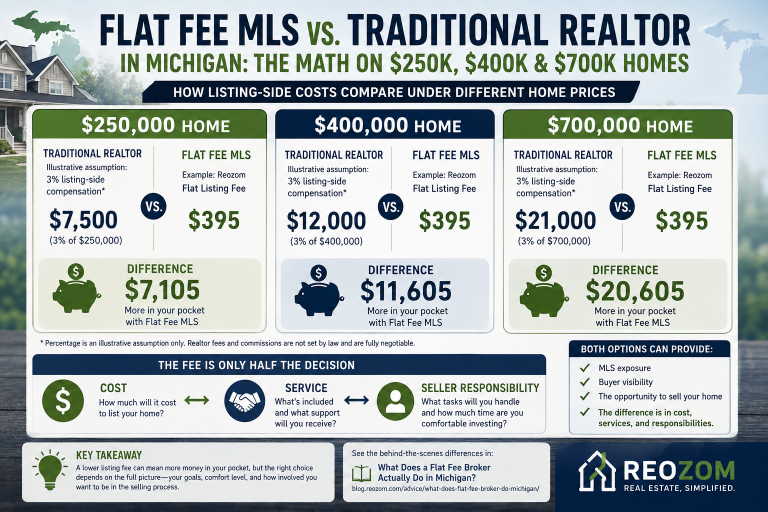
A low listing fee can still suit a remote seller who has a dependable local contact and time to manage decisions. If you need someone else to handle most of the coordination, compare services that expressly include that assistance. Use our questions about Michigan flat fee broker fees to check the full scope before paying.
A friend who can drop off a key may not be able to meet a contractor during work hours. Break the job into specific tasks instead of asking one person to “keep an eye on the house.” Confirm availability, any payment and the limits of what each person may do.
| Task | Plan before listing | Backup to record |
|---|---|---|
| Property access | Identify who can resolve a lock, key or access problem. | Second local contact and agreed availability. |
| Property checks | Agree who checks the home and reports issues with dated photos. | A professional service if the first contact is away. |
| Cleaning and exterior care | Book cleaning, lawn care or snow clearing as needed. | Alternative vendor and spending approval process. |
| Repairs and inspection visits | Name the person who can meet approved vendors. | A way to reschedule and reach you for decisions. |
| Final walkthrough and keys | Confirm who checks the home and coordinates key delivery. | A contact accepted by the closing team. |
Keep this worksheet private. A local helper’s role should be clear: access and observations are different from negotiating terms or signing documents. Route brokerage questions to the broker and signing-authority questions to the closing provider.
Distance makes missing information harder to fix. Gather the property details you can verify, recent photographs, available repair invoices, appliance information and any existing documents the broker requests. Label each item with its date and source. Do not turn an old estimate or a relative’s recollection into a definite claim in the listing.
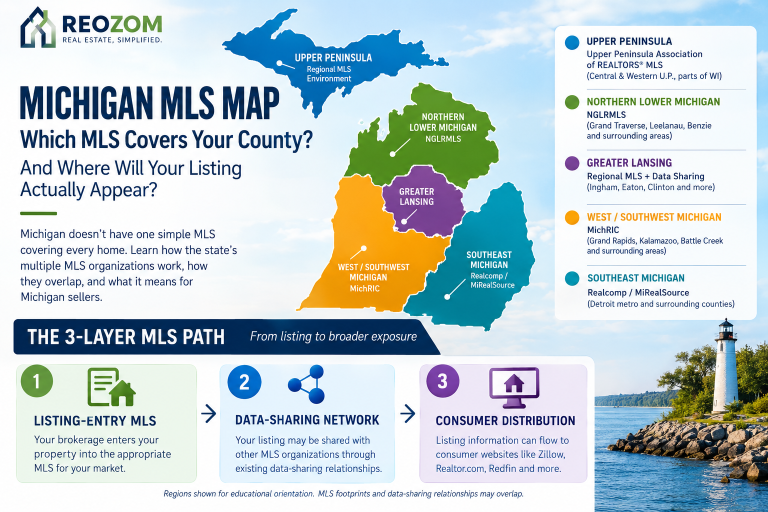
Before approving the listing, check the address, price, photos, property facts and contact routing together. For MLS selection questions, see our Michigan MLS coverage guide and confirm coverage for your exact address with the broker.

The simplest remote showing plan answers four questions: who receives the request, who approves it, how authorized visitors gain access and who handles a problem at the property. Test that process before the first appointment.
Give the broker and showing coordinator clear availability windows and an agreed notice period. Specify whether the home is occupied, how pets are handled if relevant and who confirms the home is secured afterward. Keep lockbox codes, alarm details and other access information in the approved private channel, rather than in public listing remarks.
For a vacant Michigan property, assign seasonal upkeep explicitly. Ask your insurer about any conditions that apply while the home is vacant or unoccupied. Confirm with an appropriate local professional how utilities, heating, water and property checks should be managed for that particular home. Avoid changing utilities solely because you have moved out; coordinate any change with your service providers and closing team.
Working from another state can mean meetings, travel or a different time zone compete with sale decisions. Keep a single calendar for contractual dates and confirm those dates with the professional handling the transaction. Put document review time on your calendar as soon as an offer arrives.
For example, an owner who has moved from Michigan to Arizona might schedule a regular check-in with a local contact, reserve time to review incoming documents and identify a backup way for the broker to reach them. That arrangement does not change a contractual deadline; it reduces the chance that an unanswered message creates an avoidable problem.
If the buyer asks for a repair, compare the cost, your cash required before closing and the effect on timing. A remote seller may value a simpler repair plan, but each offer still needs a full review. Our guide to comparing offers on a Michigan home that needs repairs includes a worked example.
Tell the title or closing provider where you will physically be when documents need to be signed. Ask which signing options are available for your transaction, what identification they require and whether original documents must be delivered. Do not assume an online listing process means every closing document can be signed electronically.
If another person may need to sign for you, raise that question with the closing provider before making plans. Confirm any required review and documentation with them. Also agree on final walkthrough access, possession timing, key handover and who will verify the home’s condition before that handover.
Protect the payment process as carefully as the paperwork. The Consumer Financial Protection Bureau’s guidance on closing scams recommends verifying instructions through trusted contacts using previously established phone numbers. Treat unexpected changes to payment or bank details as a reason to call your verified closing contact.
Hypothetical planning example, not a Reozom customer case: Maya has moved to Virginia and is preparing to list her vacant Michigan home with a flat fee broker. She can review documents remotely, but she cannot drive over when a key fails or a contractor needs access. Here is how she could organize the work.
Before launch, Maya asks her local contact to test the agreed access process. She records a second contact in case the first person is unavailable. If an access problem still occurs, the showing coordinator uses the private contact plan to arrange help or reschedule. Maya keeps access codes out of public remarks. The useful preparation is a tested backup, rather than a promise that every appointment will proceed without a problem.
Maya asks her broker what response is needed under the actual agreement and confirms the deadline. Her local contact helps arrange access for a qualified contractor to quote the work. Maya reviews the written scope, cost and availability before authorizing anything. She discusses the response with the appropriate transaction professional; her local helper does not negotiate or agree to a credit on her behalf.
Maya has already told the closing provider where she will be and asked which signing arrangements they can accept. Before traveling, she reconfirms the document delivery process and contact details. Her local contact handles the agreed walkthrough access and key handover. If signing or delivery arrangements change, she checks directly with the closing provider instead of assuming a remote alternative is available.
What this example shows: the broker’s service, the seller’s decisions and the local contact’s tasks need to fit together. A checklist cannot remove every delay, but it can reveal missing responsibilities before they become urgent.
Copy the fields below into a private document and complete them before listing. Share only the relevant parts with each person involved. Keep identification, banking information and access codes in the secure channels approved by the professionals handling your sale.
Test the plan with one question: “If the main contact is unavailable tomorrow, who handles access, who approves a repair and who can reach me?” Fill the gaps before approving the listing.
A remote sale may involve expenses beyond brokerage services. Build a separate allowance for local coordination so you can compare a flat fee package with the level of help you need. Obtain actual quotes and remove anything already included in your package.
| Planning item | Illustrative assumption | Amount |
|---|---|---|
| Property checks | 3 months × $175 | $525 |
| Cleaning | One appointment | $250 |
| Photography | One appointment, if separate | $400 |
| Exterior upkeep | Planning allowance | $200 |
| Example coordination total | Before other selling expenses | $1,375 |
These are invented amounts for demonstrating the worksheet, not Michigan market averages, vendor quotes or Reozom prices. Three months is a budgeting assumption, not a predicted sale timeline. Replace each number with your own quote and expected duration. Add travel only if needed, and budget repairs separately.
This coordination total is not the total cost to sell. Brokerage charges, any separately agreed compensation, closing expenses, utilities, insurance, taxes, mortgage obligations and other property-specific costs need their own review. Use our Michigan home selling-cost guide to build the wider picture.
Before your Michigan listing goes live, make sure you can answer yes to each item:
An unanswered item is a task to resolve before launch. It is usually easier to book local help or clarify responsibilities now than to do it while a buyer is waiting at the door.
Your location is a planning question to discuss with the broker. Confirm that they can list your property, how documents and communication will be handled, and which tasks you must arrange locally. The package should match the help you actually need.
Do not assume it does. Ask whether the package includes in-person services or only tools for scheduling and communicating. Put responsibility for access and on-site issues in your plan before accepting showing requests.
Ask the closing provider about the options for your specific transaction before booking travel. The answer depends on the documents, parties and signing arrangements they can accept.
Provide the property address, explain that you live outside Michigan and describe the local help you already have. Ask Reozom to confirm current coverage, package terms, showing tools, support and your remaining responsibilities. You can contact Reozom with those details, then use this checklist to build your remote sale plan.